From Explicit AI to Ambient Intelligence
For years, AI was something you noticed: chatbots, generators, dashboards, prompts.
In 2026, the most advanced AI systems are the ones you barely see.
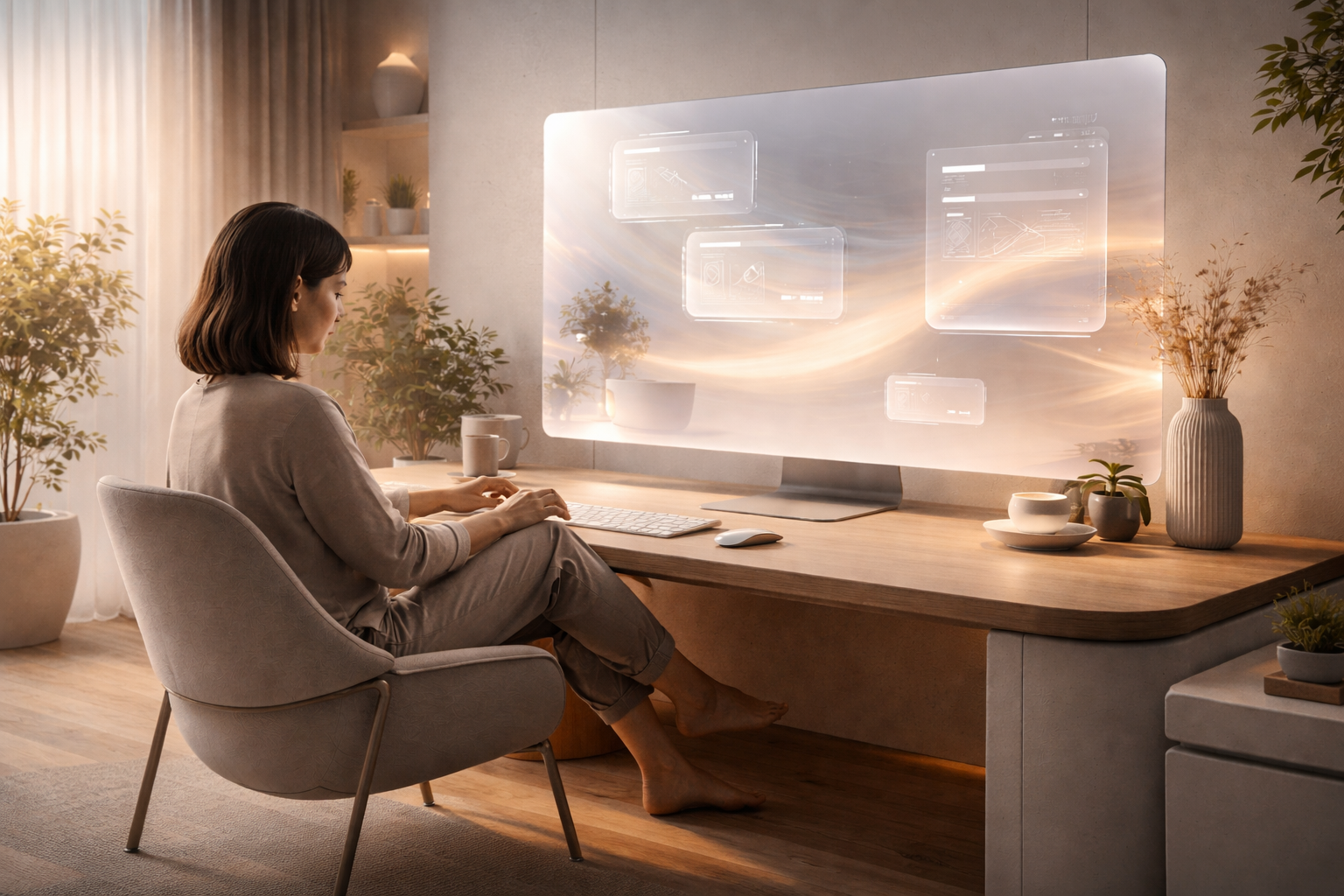
Ambient AI Creativity refers to intelligence embedded directly into creative systems—designs that adapt fluidly to user behavior, context, mood, environment, or platform without explicit interaction. AI stops being a tool and becomes atmosphere.
This evolution mirrors what happened with electricity, Wi-Fi, and cloud computing: once revolutionary, now invisible—but essential.
Why Ambient AI Is Becoming a Creative Standard
Three major shifts are driving this trend:
1. Cognitive overload backlash
Users are exhausted by constant prompts, pop-ups, choices, and visible automation. Ambient AI reduces friction by anticipating needs instead of asking for input.
2. Maturity of generative systems
AI models are now stable, fast, and context-aware enough to operate continuously in the background—adjusting layout, color, rhythm, content, and interaction flow in real time.
3. Human-centered technology pressure
Design is moving away from “look what the system can do” toward “how does this make people feel.” Invisible intelligence feels calmer, more respectful, more human.
How Ambient AI Transforms Creative Fields
Branding & Visual Identity
Brand systems become adaptive ecosystems. Logos, color palettes, motion rules, and typography subtly shift based on context, platform, or audience behavior—without breaking coherence.
Brand identity becomes responsive, not reactive.
Web Design & UX/UI
Interfaces evolve quietly:
layouts re-balance based on attention patterns
micro-animations adjust speed to user behavior
contrast and typography adapt to lighting or device context
The experience feels intuitive because the intelligence stays out of sight.
Photography, Video & Visual Content
Content is no longer static. Visuals adapt in tone, pacing, framing, or sequencing depending on where, when, and how they are consumed.
One asset, multiple lived versions.
Illustration & Motion Design
Illustrations and motion systems gain behavior. Shapes breathe, respond, soften, or sharpen based on interaction and context—creating emotional continuity instead of spectacle.
Marketing & Social Media
Campaigns stop shouting. Ambient AI optimizes timing, format, and narrative flow quietly, prioritizing relevance and emotional resonance over volume.
Aesthetic Direction of Ambient AI Creativity
This trend favors:
soft gradients and adaptive color systems
calm motion with organic easing
minimal interfaces with deep intelligence
natural rhythm over mechanical precision
visuals that feel present, not performative
The goal is not to impress—it’s to support.
Why This Matters for 2026
Because the future of creativity isn’t louder, faster, or more complex.
It’s quieter, smarter, and more considerate.
Ambient AI Creativity signals a cultural shift: technology that blends into life instead of competing with it. The most advanced experiences will feel effortless—not because they are simple, but because intelligence has learned when to step back.
Conclusion
In 2026, the best creative systems won’t announce themselves as “AI-powered.”
They won’t need to.
They’ll simply work—fluidly, ethically, invisibly—supporting human intention instead of replacing it.
That is the new creative frontier.
Ambient AI Creativity: When Intelligence Fades Into the Experience