From Visual Identity to Lived Experience
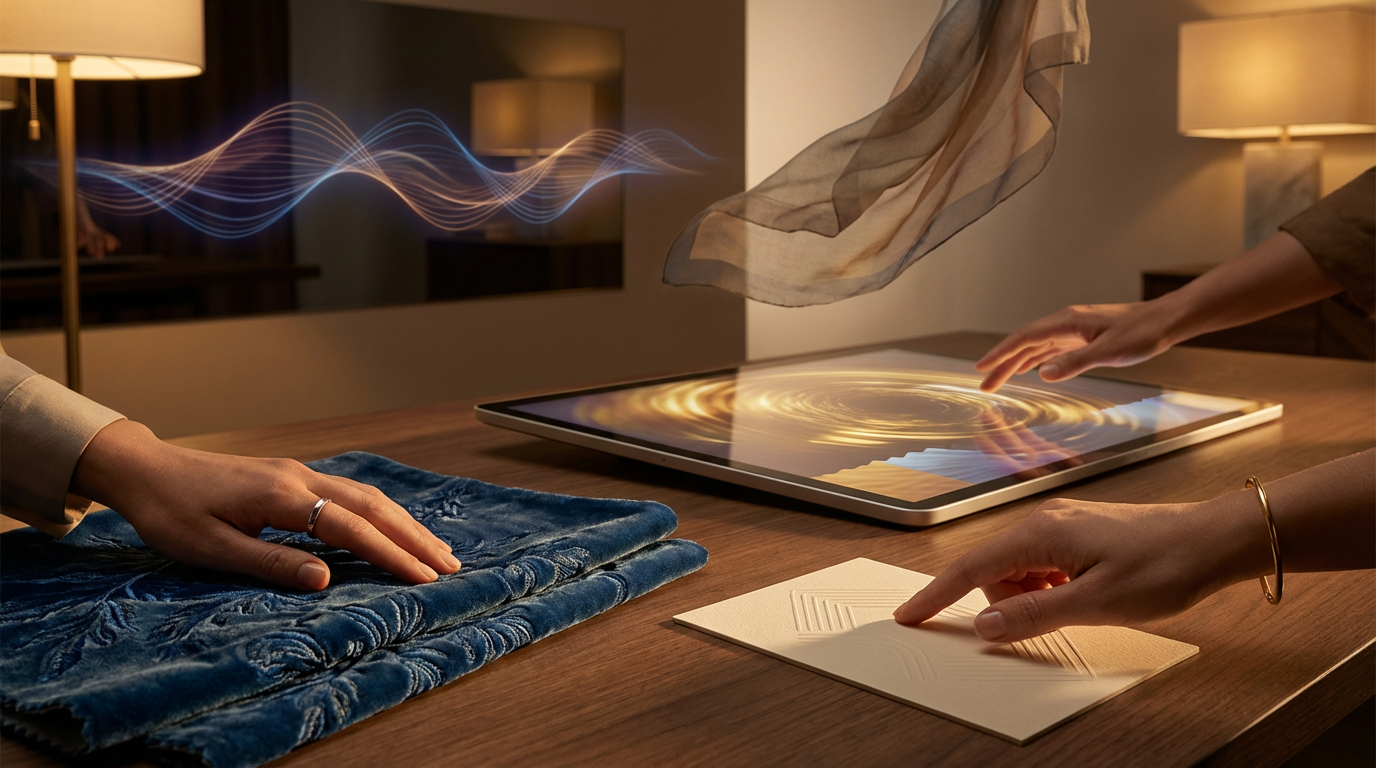
For decades, branding has been almost entirely a visual discipline. A logo, a color palette, a typeface. But in 2026, the most forward-thinking brands and agencies are treating identity as something the audience experiences with their entire body — not just their eyes. Texture you want to touch. Motion that feels alive. Sound that triggers recognition. Interaction that responds like a living thing.
According to The Branding Journal's 2026 trends analysis, brand identities are becoming more alive and flexible. In 2026, design is no longer just visual but rather sensory. Texture, depth, sound and movement are taking more space. Brands want to be felt, not just seen. The Branding Journal
This is Sensory Branding — and it is rewriting the rules of what a visual identity system actually needs to deliver.
Why This Shift Is Happening Now
Three forces are converging to make Sensory Branding the defining approach of 2026. First, audiences are saturated with AI-generated visual content. When everything looks polished and precise, the brands that register emotionally are the ones that break through — and emotion is triggered far more reliably by texture, rhythm and motion than by color alone.
Second, the platforms where brands live have become multisensory environments. Social media rewards motion and sound. Websites are expected to react and move. Packaging is being designed to feel as compelling as it looks. Static pages feel lifeless to users in 2026. Scroll-triggered animations, hover-state transitions and loading sequences have moved from pleasant bonuses to standard expectations. This shift reflects a fundamental truth: human attention spans naturally reward dynamism, and motion creates emotional resonance that still images can rarely match. Design Related
Third, AI tools are now capable enough to generate consistent sensory systems — motion rules, sound palettes, haptic patterns — making Sensory Branding accessible beyond the budgets of only the largest global brands.
The Five Dimensions of Sensory Branding
The most complete Sensory Branding systems in 2026 work across five dimensions simultaneously.
Motion is the most visible. Logos appear soft-edged, melting or in motion. These forms feel alive and adaptable rather than rigid. The Branding Journal Brands define motion rules — velocity, easing, rhythm — just as they once defined color codes. A brand's animation style becomes as recognizable as its typeface.
Texture operates across both physical and digital touchpoints. In print and packaging, this means raw paper surfaces, ink bleed effects and scanned collage elements. In digital environments, it means UI surfaces that suggest materiality — glass, clay, fabric — even though they exist only on screen.
Sound design is gaining serious strategic weight. Brand sonic identities — the tones, rhythms and audio signatures that accompany digital interactions — are being developed with the same rigor as visual systems. The click of a button, the chime of a notification, the ambient sound of a website: these are brand decisions, not technical afterthoughts.
Interaction defines how the brand responds to the user's presence. A Sensory Brand does not just display content — it reacts, breathes and acknowledges. Micro-interactions become a form of personality expression, making the experience feel like a conversation rather than a broadcast.
Narrative texture is the fifth dimension — the emotional atmosphere created by the combination of all the above. When motion, sound, texture and interaction align around a consistent emotional intention, the brand stops being a system of rules and becomes a recognizable feeling.
What This Means for Designers, Agencies and Clients
For designers, Sensory Branding demands a broader skillset than visual identity alone. It requires understanding motion principles, sound psychology, material behavior and interaction choreography. It means designing behaviors, not just appearances.
For agencies, it represents an expanded value proposition. In 2026, brands are evolving beyond traditional creative briefs to embrace strategies that build consistent, authoritative brand ecosystems designed to win over both humans and AI systems. Lippincott A Sensory Branding system is inherently harder to replicate through templates or automation — which makes the craft more valuable, not less.
For clients, the conversation shifts from "what does our brand look like?" to "what does our brand feel like?" That is a more powerful brief, and it produces more durable, emotionally resonant results.
How to Start Building a Sensory Brand Today
Start by auditing your current brand across all touchpoints — not just what it looks like, but how it moves, what sounds accompany it and how it responds to interaction. Identify the emotional intention behind the brand: is it calm and trustworthy? Playful and energetic? Bold and disruptive? Every sensory element should serve that emotional direction.
Define motion rules before you design individual animations. Establish velocity curves, easing styles and interaction rhythms that feel consistent with the brand personality. Explore a sonic palette — even a simple one — that gives the brand a recognizable audio presence. And build texture into both digital and physical touchpoints, choosing materials and surfaces that reinforce the brand's emotional register.
The goal is not complexity. The goal is coherence across every sense the audience encounters.
Conclusion
Sensory Branding marks a fundamental evolution in what brand identity means. As visual sameness increases, the brands that build the deepest loyalty will be the ones that create a feeling their audience recognizes before they even consciously register the logo. In 2026, the most powerful brand asset is not a color — it is an emotion. And emotion lives in texture, motion, sound and the quality of every interaction.
Design for what people feel. The rest will follow.
Sensory Branding: When Brands Stop Being Seen and Start Being Felt